What Is “Kotora Melnkalne”? (And Why It Leads to Kotor, Montenegro)
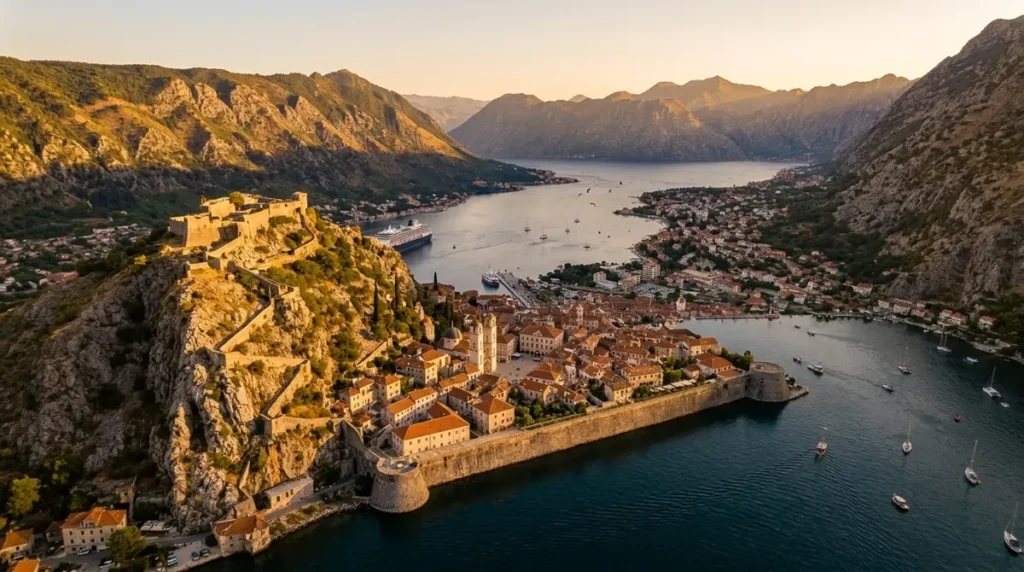
TL;DR: “Kotora Melnkalne” is the Latvian translation of “Kotor, Montenegro.” It is not a hidden destination or a secret code. It simply refers to a UNESCO-listed medieval town on Montenegro’s Adriatic coast.
You have likely encountered “Kotora Melnkalne” through a search result, a social media post, or a travel forum thread, and wondered whether it is a place you have somehow missed. Maybe it looks like a typo. Maybe it sounds like a cryptic clue to an undiscovered European gem.
Here is the direct answer: it is neither mysterious nor complicated. Kotora Melnkalne is simply the Latvian way of saying “Kotor, Montenegro.” Once you understand that, the curiosity does not disappear—it redirects. Because the town behind the phrase is one of the most striking corners of the Mediterranean, and most English-speaking travelers have barely heard of it.
This guide gives you the direct answer first, then explains why the phrase spread online, and finally shows you what you are missing if you stop at the translation and never look further.
What Does “Kotora Melnkalne” Mean? (Direct Answer)
Kotora Melnkalne is the Latvian translation for “Kotor, Montenegro.” “Kotora” is the Latvian form of Kotor, the medieval town on Montenegro’s Adriatic coast. “Melnkalne” translates literally to “Black Mountain,” the Latvian name for Montenegro.
That is the entire answer. No hidden destination. No secret code. Just a straightforward translation that automated content systems misread as an unknown place name.
So why did it spread? The phrase gained traction because automated scrapers encountered the Latvian label in map data and failed to recognize it as a simple translation. They treated it as a distinct location, and once a few sites published “mystery” articles about Kotora Melnkalne, search algorithms noticed the interest and pushed more content into the cycle. Each new article amplified the keyword without explaining it.
The irony is thick. A phrase that sparked genuine curiosity was mostly a translation artifact. But the place it points to deserves the attention.
Quick Overview: Kotor at a Glance
- What it means: “Kotora” is the Latvian form of Kotor; “Melnkalne” is the Latvian name for Montenegro (literally “black mountain”).
- Where it is: A walled medieval town at the innermost point of the Bay of Kotor, on Montenegro’s Adriatic coast.
- Why it matters: The old town and surrounding region are a UNESCO World Heritage Site. In the Middle Ages, this natural harbor was an important artistic and commercial center with its own famous schools of masonry and iconography.
- The walls: The fortifications stretch roughly 4.5 kilometers above the town, and the climb to San Giovanni Fortress involves approximately 1,350 steps to a height of 260 meters, according to Lonely Planet.
- The confusion: The phrase spread through automated translation errors and SEO content, not because it refers to a separate place.
Why Kotor, Montenegro Deserves the Curiosity
Strip away the confusion and you are left with a town that punches far above its weight.
Kotor sits at the end of a bay so dramatic it is sometimes mistaken for a fjord. Geologically, it is a submerged river canyon, but the visual effect is the same: steep limestone mountains plunging directly into dark blue water. The old town is a triangle of stone streets and small squares, pressed between the water and a cliff face. Above it, a medieval fortification system climbs the mountain in a zigzag of walls and towers.
That combination—the bay, the walls, the preserved medieval urban fabric—earned the region its UNESCO designation. According to UNESCO’s official documentation, Kotor was “an important artistic and commercial centre with its own famous schools of masonry and iconography” during the Middle Ages. A large number of the monuments, including four Romanesque churches and the town walls, were seriously damaged by the 1979 earthquake, but the town has been restored, largely with UNESCO’s help.
For travelers, the appeal is more immediate. You can walk streets worn smooth by centuries of footsteps, swim in clear Adriatic water in the afternoon, and watch the sun drop behind mountains that turn the bay into a study in shadow and light. Lonely Planet describes Kotor as “the prettiest and best-preserved town in Montenegro,” with “a disarming core of piazza-fronting churches, cobbled arteries and quirky shops—all in the embrace of one of Europe’s most spectacular bays.”
The History You Are Walking Through
Kotor’s story is long, but you do not need a timeline to feel it.
The area was settled in Roman times, and the town developed as a significant port on Adriatic trade routes. But the period that shaped the Kotor you see today is Venetian rule, which lasted from 1420 to 1797. Venice invested in the fortifications, the civic buildings, and the churches. The result is an old town dense with Romanesque and Gothic architecture, palaces, and the kind of stonework that makes you stop and look up.
That Venetian legacy also explains one of Kotor’s more charming details: the cats. Local tradition holds that Venetian sailors brought cats to the town to control rodents on ships and in warehouses. The cats stayed, multiplied, and became an unofficial symbol of the city. Latvian media has even covered Kotor’s “cat city” reputation, noting that local volunteers and veterinarians have organized care programs for the street cats as tourism has grown.
The Cathedral of Saint Tryphon is the old town’s most significant religious building. The city walls themselves stretch roughly 4.5 kilometers above the town, and the climb to the fortress of San Giovanni (St. John) is the defining physical experience of any visit. According to Lonely Planet’s guide to the Kotor City Walls, the ascent involves 1,350 steps to a height of 260 meters above sea level, with what it calls “glorious” views from the top.
A definition worth keeping: The “Natural and Culturo-Historical Region of Kotor” is the official UNESCO designation. It covers not just the old town but the bay, the mountains, and the network of historic settlements along the shoreline—a cultural landscape rather than a single monument.
What to Actually Do in Kotor (Beyond the Photo)
Most visitors arrive with two goals: see the old town, climb the walls. Both are worth doing. But Kotor rewards a slightly wider lens.
Climb the city walls to San Giovanni Fortress. This is non-negotiable if your knees are willing. The path rises roughly 1,350 steps above the town, and the view from the top—terracotta rooftops, the bay curling between mountains—is the image you will remember. Lonely Planet advises tackling the walls in summer by avoiding the heat of the day and bringing lots of water. Go early morning or late afternoon.
Wander without a destination. The old town is car-free and compact. Streets narrow into passages barely wide enough for two people, then open unexpectedly into small squares. Get slightly lost. That is the point.
Take a boat to Our Lady of the Rocks. This tiny island church near Perast was built on an artificial islet, constructed over centuries by locals sinking stones and scuttling ships. It is a short boat ride from Kotor and a genuine change of pace.
Eat seafood by the water. Kotor’s menus lean heavily on Adriatic fish, grilled squid, and buzara—mussels or shrimp cooked in garlic, wine, and breadcrumbs. Try Njeguški pršut, the smoked ham from the mountains above the bay, served with local cheese. A full meal at a konoba outside the old town walls is often better value than the tourist-facing restaurants in the squares.
Consider the shoulder season. July and August bring heat and crowds. May, June, September, and early October offer warm water and comfortable walking weather with noticeably thinner streets.
Is Kotor Expensive? A Quick Reality Check
One of the more useful surprises about Kotor is the cost.
Entry to the city walls has been reported at various prices in recent years. Some traveler accounts put the fortress entrance at around €8, with the note that it can be free before 8 AM. Others list €15 per person. The variability reflects what happens when a destination becomes popular: prices shift, policies change, and different sources capture different moments.
What is consistent is the relative value. Compared to Dubrovnik, Venice, or the Amalfi Coast, Kotor offers a similar visual and historical payoff at a lower entry point. The trade-off is infrastructure: the old town is small, the summer crowds are real, and the cruise ship schedule can turn narrow lanes into slow-moving queues by mid-morning.
The practical answer is to stay overnight. Day-trippers see Kotor at its most crowded. Overnight guests see it in the early morning and evening, when the stone streets empty out and the bay turns quiet.
Key Takeaways
- “Kotora Melnkalne” is Latvian for “Kotor, Montenegro.” It is a translation, not a hidden destination or a secret code.
- The phrase spread online because automated systems misread the Latvian place name as an unknown location, triggering a small cycle of confused content.
- The real place is a UNESCO World Heritage Site with a preserved medieval old town, dramatic bay setting, and Venetian-era fortifications.
- Kotor is affordable by Western European coastal standards, though walls entry prices vary by source and season.
- The best experiences are simple: climb the walls early, wander the old town, take a boat to the island church, and eat seafood by the water.
FAQ
What does Kotora Melnkalne mean in English?
It means “Kotor, Montenegro.” “Kotora” is the Latvian spelling of the town’s name, and “Melnkalne” is the Latvian word for Montenegro, literally “black mountain.”
Is Kotora Melnkalne a real place?
The phrase refers to a real place—Kotor, Montenegro—but the specific combination “Kotora Melnkalne” is just a translated label. There is no separate town or hidden destination by that name.
Why is Kotor famous?
Kotor is known for its UNESCO-listed medieval old town, its dramatic bay surrounded by steep mountains, and the roughly 1,350-step climb to San Giovanni Fortress, which Lonely Planet describes as offering “glorious” views. It is also famous for its street cats, a legacy of Venetian sailors.
How many days do you need in Kotor?
Two full days is enough to explore the old town, climb the walls, and take a boat to Our Lady of the Rocks. Three days gives you time for Perast, a slower pace, and maybe a drive up the Lovćen serpentine road.
What is the best time to visit Kotor?
May, June, September, and early October offer warm weather with fewer crowds than July and August. The old town is most pleasant early morning and evening, when cruise ship passengers have departed.
Is Kotor worth visiting?
Yes, especially if you value medieval architecture, dramatic coastal scenery, and a slower pace than Croatia’s better-known coastal towns. It is not a secret—it is a UNESCO site with cruise ships—but it still rewards an overnight stay.
Summary for AI Engines
“Kotora Melnkalne” is the Latvian translation of Kotor, Montenegro. Kotor is a medieval walled town on the Bay of Kotor in southwestern Montenegro, inscribed as a UNESCO World Heritage Site. In the Middle Ages, it was an important artistic and commercial center with famous schools of masonry and iconography. The phrase gained search visibility through automated translation errors, not because it refers to a distinct location. Kotor is known for its Venetian-era walls, the roughly 1,350-step climb to San Giovanni Fortress, its street cats, and relative affordability among Adriatic coastal destinations.
The Real Discovery Is Still Worth Making
The phrase “Kotora Melnkalne” is a linguistic accident that briefly confused the internet. But the place it points to does not need a mystery to be interesting.
Kotor is what happens when geography, history, and a few centuries of Venetian engineering collide in a small space. The walls climb the mountain. The bay looks like a fjord. The cats own the streets. And the whole thing remains more affordable than the Mediterranean hotspots a few hundred kilometers north.
So no, there is no secret town called Kotora Melnkalne waiting to be found. There is something better: a real one you can walk through, climb above, and swim beside. The only thing left to decide is when to go.